

Key Takeaways
Our Verdict
No single Japanese region is universally 'best' — each rewards a different type of traveler. Tokyo overwhelms in the best possible way; Kyoto quiets the mind; Osaka feeds the soul. The richest trips often combine two or three regions, letting Japan's extraordinary range unfold naturally.
| Best for | Recommended |
|---|---|
| First-time visitors wanting maximum variety | Tokyo |
| Culture seekers and history enthusiasts | Kyoto |
| Food travelers and sociable, budget-aware explorers | Osaka |
| Repeat visitors seeking slower, off-the-beaten-path depth | Hiroshima, Hokkaido, or Tohoku |
Tokyo: Controlled Chaos at Its Most Thrilling
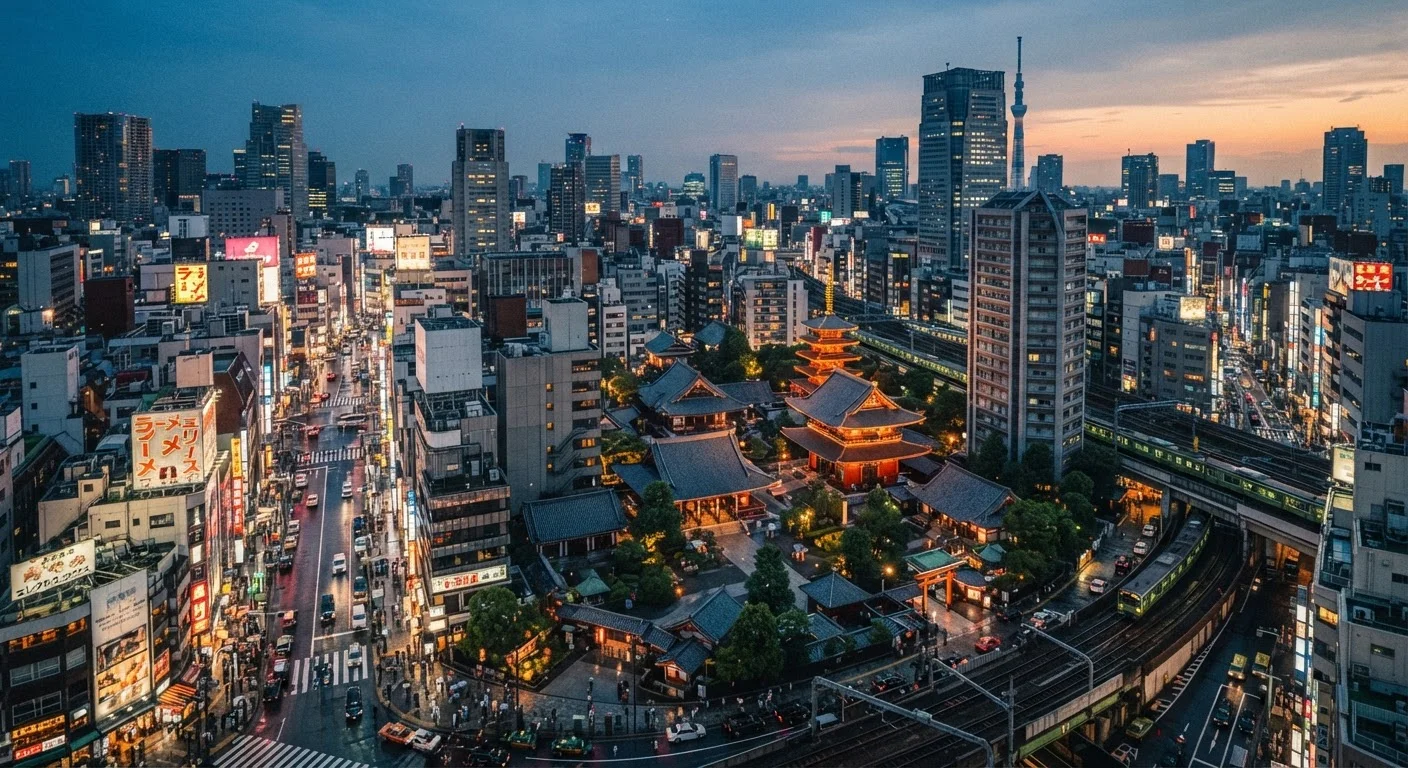
Tokyo is less a city than a collection of distinct neighborhoods, each with its own personality. Shibuya pulses with neon and youth energy; Yanaka preserves Edo-era streetscapes; Shinjuku contains multitudes — serene gardens by day, electric entertainment by night. For first-time visitors to Japan, Tokyo functions as a superb orientation point because it offers everything in concentrated form: extraordinary food at every price range, world-class museums, day trips to Nikko or Kamakura, and infrastructure so reliable it almost feels like science fiction.
The trade-off is scale. Tokyo can feel relentless, and accommodation costs sit noticeably higher than elsewhere in Japan. Travelers who need quiet or who came specifically for temples and traditional arts may find the city more stimulating than fulfilling. That said, neighborhoods like Yanaka and Nezu reward wanderers with a calmer, older Tokyo that's easy to overlook.
Use the JR Pass Strategically
Japan's rail network is one of the world's most efficient, and a Japan Rail (JR) Pass can make multi-region travel remarkably seamless. Calculate whether the pass makes financial sense for your specific itinerary — for short Tokyo-only trips it often doesn't, but for routes covering Tokyo, Kyoto, Osaka, and Hiroshima it frequently does. Verify current pass pricing and coverage directly with JR or your travel provider before purchasing.
Kyoto: Where Old Japan Still Breathes
Kyoto rewards patience. The city's roughly 1,600 temples and 400 shrines aren't tourist attractions so much as living institutions — many are still active religious sites where monks practice and locals pray. Arashiyama's bamboo groves, Fushimi Inari's seemingly endless torii gates, and the preserved machiya townhouses of Gion create a travel experience that's genuinely irreplaceable.
Kyoto also excels at seasonal travel. Cherry blossom season (late March to mid-April) and autumn foliage (November) are extraordinary but draw enormous crowds. Visiting slightly off-peak — early morning visits to Fushimi Inari, or mid-week temple circuits — dramatically improves the experience. Costs here are moderate, though accommodations in central Gion or near major temples carry a premium. Budget travelers can stay further out and use Kyoto's reliable bus system.
| Tokyo | Kyoto | Osaka | Beyond (Hiroshima/Hokkaido) | |
|---|---|---|---|---|
| Overall Pace | Fast, intense | Slow, contemplative | Energetic, sociable | Relaxed, exploratory |
| Cultural Depth | Broad and modern | Deep traditional focus | Lively local culture | Varied and authentic |
| Food Scene | World-class, all styles | Refined, kaiseki-focused | Street food paradise | Regional specialties |
| Relative Cost | Higher | Moderate–high | Moderate | Lower–moderate |
| Crowd Levels | High year-round | Very high peak seasons | High but manageable | Low to moderate |
| Best For | First-timers, variety | History and temples | Food and nightlife | Depth and discovery |
Osaka: Japan's Most Approachable City
Osaka has a reputation for being louder, friendlier, and hungrier than the rest of Japan — and that reputation is largely earned. The city's food culture is legendary: takoyaki (octopus balls), kushikatsu (deep-fried skewers), and okonomiyaki (savory pancakes) are not just snacks but civic pride. Dotonbori, the city's neon-soaked entertainment strip, embodies Osaka's unapologetically fun character.
Practically speaking, Osaka is often the most affordable of Japan's major cities for accommodation, and its central location makes it an ideal base for day trips to Nara (deer park and giant Buddha), Hiroshima and Miyajima, and even Kyoto. Travelers who find Kyoto's temple density overwhelming often decompress in Osaka's street-level energy. The city's castle district and the Shinsekai retro neighborhood also provide genuine historical and cultural texture beyond the food scene.
Beyond the Big Three: Hiroshima, Hokkaido, and Tohoku
Japan's most memorable experiences don't always happen in its most famous cities. Hiroshima carries profound historical weight — the Peace Memorial Museum and Atomic Bomb Dome demand thoughtful, unhurried time — alongside the beautiful island of Miyajima, with its floating torii gate and wild deer. Hokkaido, Japan's northernmost main island, offers a completely different climate and geography: lavender fields in summer, powder skiing in winter, and seafood (particularly crab and sea urchin) that rivals anywhere in the country.
Tohoku, the northeastern region of Honshu, remains one of Japan's least-crowded areas despite containing remarkable destinations like Yamadera cliff temple, Matsushima Bay, and the castle town of Aizuwakamatsu. For repeat visitors or those specifically seeking fewer crowds and deeper cultural immersion, Tohoku is frequently cited by seasoned Japan travelers as a revelation.
Verify current entry requirements, transportation passes, and regional tourism conditions with official government and Japan Tourism Agency sources before finalizing any itinerary, as conditions can change.