

Key Takeaways
Iceland in Winter
Winter in Iceland — roughly November through February — means dramatically short days, sub-freezing temperatures, unpredictable storms, and near-total darkness in the far north. It's also the prime season for northern lights viewing and a genuinely otherworldly travel experience. The reality is both harsher and more magical than most travel content lets on.
Iceland sits just south of the Arctic Circle, so the winter solstice brings as few as four to five hours of usable daylight in Reykjavík, and near-zero daylight in the northernmost regions.
The Darkness: What Four Hours of Daylight Really Means
Most visitors underestimate how psychologically different the Icelandic winter light cycle feels. In Reykjavík in late December, the sun rises close to 11:30 a.m. and sets by 3:30 p.m. That's not twilight — that's genuine, brief daylight sandwiched between long stretches of dark.
The upside? That four-hour window is bathed in low, golden light that photographers chase in summer for mere minutes. Waterfalls, snow-draped lava fields, and frost-rimmed coastlines look genuinely cinematic during the midday hours. Plan your outdoor sightseeing in a tight window between 11 a.m. and 3 p.m., and you'll make the most of it.
The darkness after 4 p.m. isn't wasted time — it's aurora time, hot spring time, and cozy guesthouse time. Reframe your expectations and the rhythm starts to feel natural within a day or two.
Build Your Day Around the Light Window
In December and January, plan all outdoor sightseeing between 11 a.m. and 3:30 p.m. to maximize usable daylight. Front-load driving and outdoor activities in this window, then shift to aurora watching, hot springs, or indoor experiences once darkness falls. Fighting the light schedule makes for a frustrating trip — working with it makes for an extraordinary one.
The Northern Lights: Honest Expectations vs. Instagram Reality
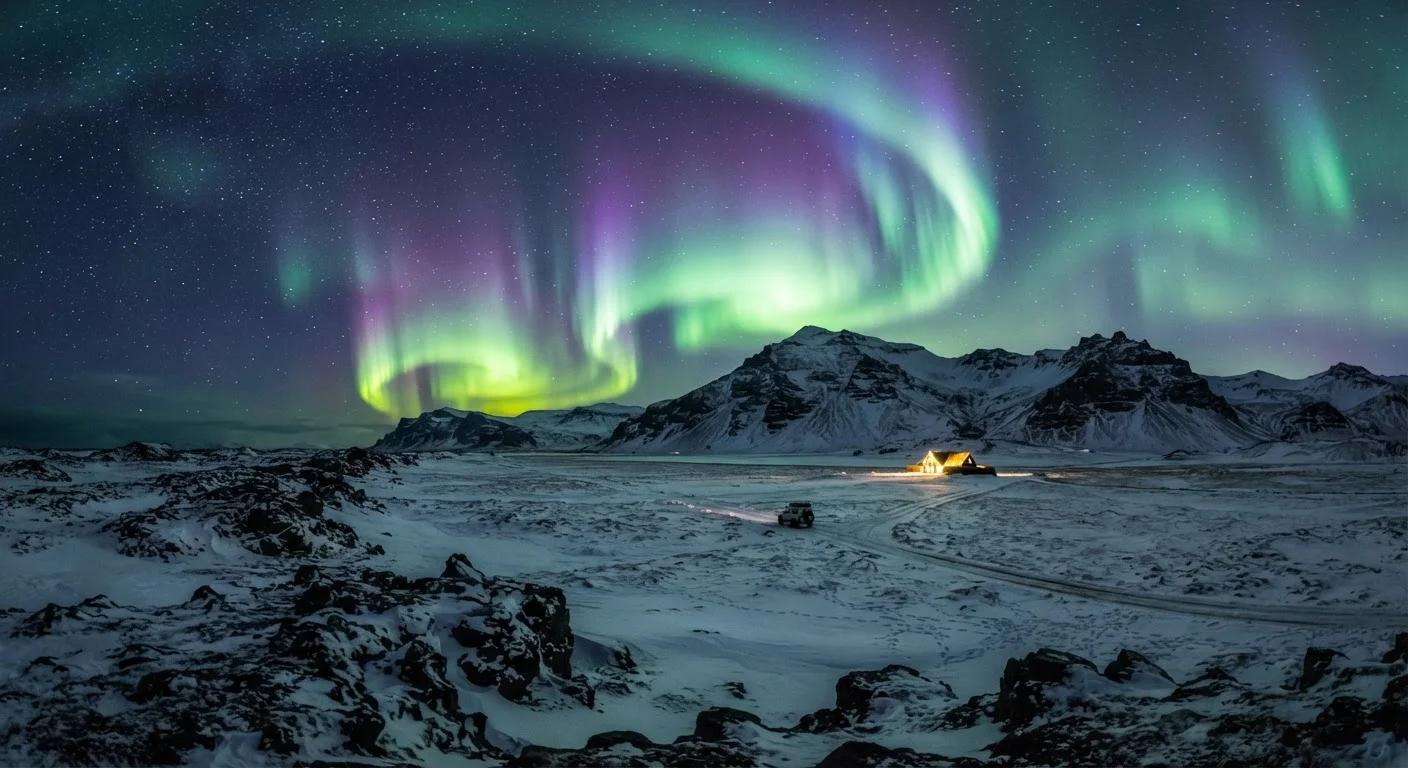
The aurora borealis is real, spectacular, and entirely unpredictable. Seeing it requires three things to align simultaneously: clear skies, high solar activity (measured by the Kp index), and darkness. Iceland's weather is notoriously changeable, and cloud cover is your biggest enemy.
Tour operators and aurora apps — including the Icelandic Met Office's aurora forecast — can help you identify promising nights, but even locals stress that flexibility is essential. Booking at least five or six nights gives you a meaningful statistical chance of one good aurora sighting. Travelers on two-night stopovers often miss it entirely.
4–5 hrs
Usable daylight in Reykjavík at winter solstice
According to data from the Icelandic Meteorological Office, sunrise and sunset in Reykjavík in late December are separated by approximately four to five hours.
~75%
Percentage of winter nights with significant cloud cover
Iceland's North Atlantic location means cloud cover is the norm rather than the exception in winter months, according to general climatological data for the region.
Kp 1–3
Aurora visibility range typical on clear Icelandic nights
The NOAA Space Weather Prediction Center notes that Kp levels of 1–3 — the most common range — are still visible to the naked eye in low-light-pollution areas.
If skies are clear and you're outside Reykjavík's light pollution, even a modest Kp-2 aurora can be striking to the naked eye. Higher Kp events — Kp 5 and above — can produce dancing curtains visible even from the city. Check the forecast nightly and stay willing to wake up at 2 a.m. if the sky clears.
The Cold and Weather: Preparing for Iceland's Winter Reality
Iceland in winter is wet, windy, and cold — but rarely Arctic-brutal in the capital. Reykjavík's coastal position keeps temperatures from dropping as low as interior regions, though wind chill regularly makes 32°F (0°C) feel much harsher. A quality waterproof and windproof outer layer matters more than raw insulation value.
Storms — called útilegumaður locally in slang — can arrive fast and hard, especially between November and February. Horizontal sleet, 60 mph gusts, and sudden whiteouts are genuine hazards, not dramatic travel writing. The Icelandic Met Office (vedur.is) publishes color-coded weather warnings; yellow and orange warnings mean you should reconsider travel outside urban areas.
Packing layers of merino wool next to skin, a mid-layer fleece, and a waterproof shell jacket and pants will serve you through most conditions. Waterproof hiking boots with ankle support are essential — Reykjavík sidewalks ice over, and trails can be sheets of polished ice. Microspike traction devices are worth packing or renting.
What Winter Iceland Actually Rewards
Despite the challenges, winter unlocks experiences that simply don't exist in summer. Ice caves inside Vatnajökull glacier — accessible only when temperatures stay below freezing — are among the most surreal natural interiors on earth. They typically open in November and close by March, weather and structural safety permitting. Access requires a certified glacier guide; this isn't a self-guided excursion.
Crowds at popular sites like Seljalandsfoss waterfall and the Golden Circle landmarks are a fraction of peak summer levels. You'll share viewpoints with handfuls of visitors rather than hundreds. Hot springs and geothermal pools, meanwhile, become even more extraordinary when steam rises into the dark, frigid air around you.
Winter travel also invites a slower pace. Guesthouses and small hotels outside Reykjavík are quieter. Local restaurants have space. Conversations happen. Iceland in winter rewards travelers who come prepared, curious, and genuinely open to what the darkness delivers — not just the aurora shot, but the whole remarkable season.