

Key Takeaways
What's Actually Happening When a Tomato Cracks
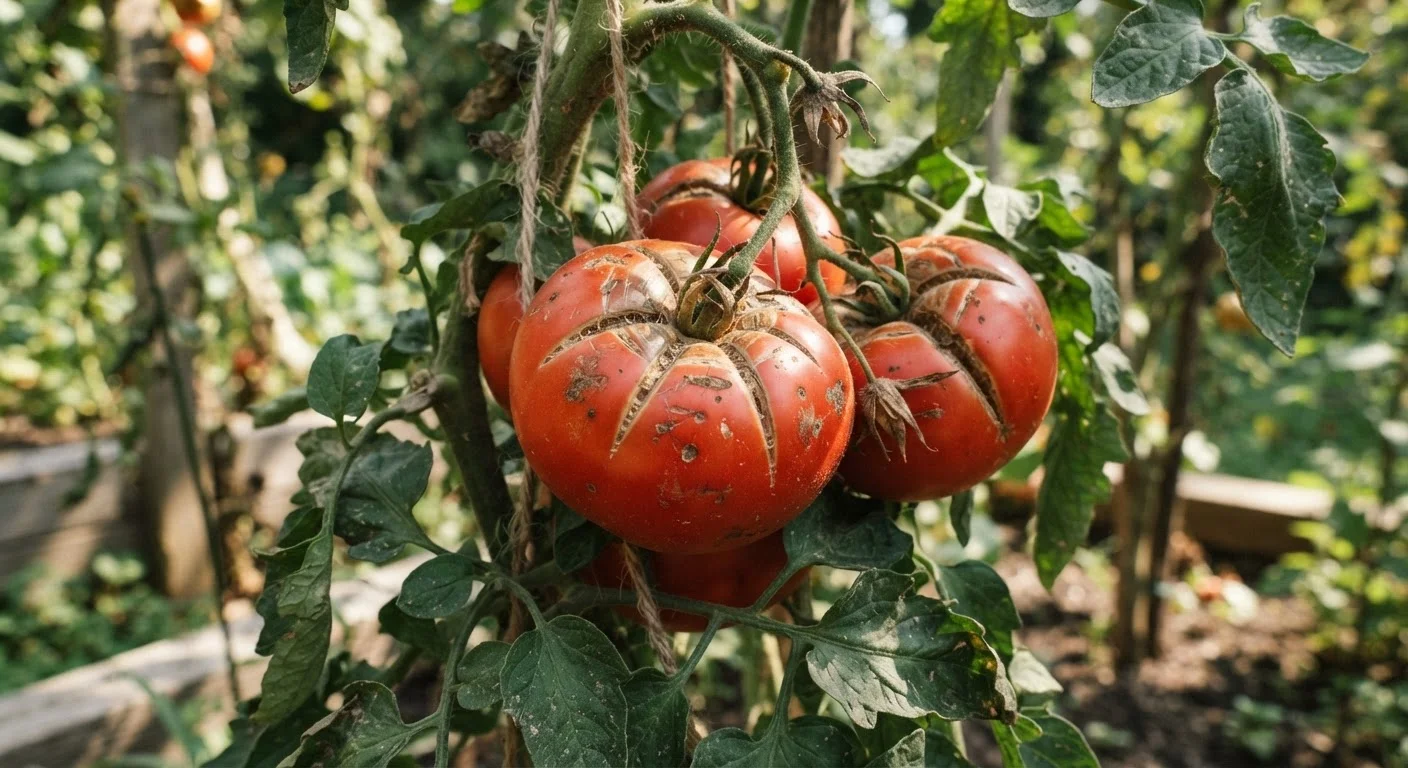
Tomato cracking isn't a disease or a pest problem — it's a structural failure caused by uneven growth. When a tomato plant takes up water rapidly after a dry period, the interior flesh expands faster than the outer skin can stretch. The skin splits under pressure, leaving behind the radial cracks (running from the stem downward) or concentric rings (circling around the stem) that gardeners find so discouraging.
Both types of cracking are rooted in the same underlying cause: inconsistent moisture availability. Understanding this makes the problem much easier to address, because the fix is almost always a change in routine rather than a special product or treatment.
2 types
Main crack patterns in tomatoes
Radial cracking (from stem outward) and concentric cracking (circular rings around the stem) are the two distinct splitting patterns, each linked to specific growth and watering conditions.
1–2 inches
Ideal weekly water depth for tomatoes
University cooperative extension programs generally recommend tomatoes receive about one to two inches of water per week, delivered consistently rather than in irregular bursts.
Common Mistakes That Lead to Split Tomatoes
Most cases of tomato cracking trace back to a handful of predictable habits. Correcting even one or two of them can dramatically reduce the number of split fruits you find at harvest time.
Watering inconsistently — letting the soil dry out completely between waterings, then flooding the bed.
Why it happens: Gardeners often water reactively, only when they notice wilting or after rainfall fails to arrive. This creates a feast-or-famine cycle that the plant's fruit cannot handle.
Skipping mulch around the base of the plant, leaving soil exposed to rapid drying.
Why it happens: Many home gardeners underestimate how quickly bare soil loses moisture, especially during summer heat. Mulching can feel like an extra step that doesn't seem immediately necessary.
Leaving ripe or near-ripe tomatoes on the vine through rain events or heavy irrigation.
Why it happens: Gardeners want fruit to reach peak flavor on the vine and may delay picking, not realizing that fully ripe fruit has less skin elasticity and cracks more easily under water pressure.
Choosing crack-prone varieties without knowing it and then blaming watering habits alone.
Why it happens: Many popular heirloom varieties, while flavorful, have thinner skins and are genetically more susceptible to cracking regardless of how carefully they're watered.
Over-fertilizing with nitrogen late in the season, pushing rapid leafy growth at fruiting time.
Why it happens: Gardeners trying to boost a struggling plant may apply extra fertilizer during summer, not realizing that excess nitrogen stimulates fast, uneven growth that stretches fruit skin beyond its limit.
Avoid Sudden Heavy Watering After Dry Periods
If your tomatoes have gone without water during a heat wave and then receive a heavy rain or deep irrigation all at once, the fruit is almost certain to crack. The sudden surge of water causes rapid interior expansion that the skin simply can't keep up with. Never try to 'make up' for missed watering with a single large soak — gradually reintroduce consistent moisture instead.
Building a Routine That Protects Your Fruit
Preventing cracks is less about reacting to problems and more about creating stable growing conditions from the start. A few consistent habits — steady watering, proper mulching, and timely harvesting — do most of the work.
If you've already dealt with a season of cracking, use it as useful feedback: check whether your watering was irregular, whether your beds lost moisture quickly in heat, and whether you held fruit on the vine too long. Adjusting those three areas alone tends to produce noticeably better results the following season.
Cracked Tomatoes Are Still Edible — With Caution
A cracked tomato isn't automatically waste, but splits do expose the flesh to bacteria, mold, and insects. Use cracked fruit promptly — same day if possible — and cut away the damaged area before eating or cooking. Discard any fruit showing signs of rot or mold growth at or near the crack.
For gardeners who want to go further, choosing crack-resistant varieties at planting time removes a significant layer of vulnerability, especially in climates with unpredictable summer rain. Your local cooperative extension service is a reliable, free resource for variety recommendations tailored to your region's specific conditions.