

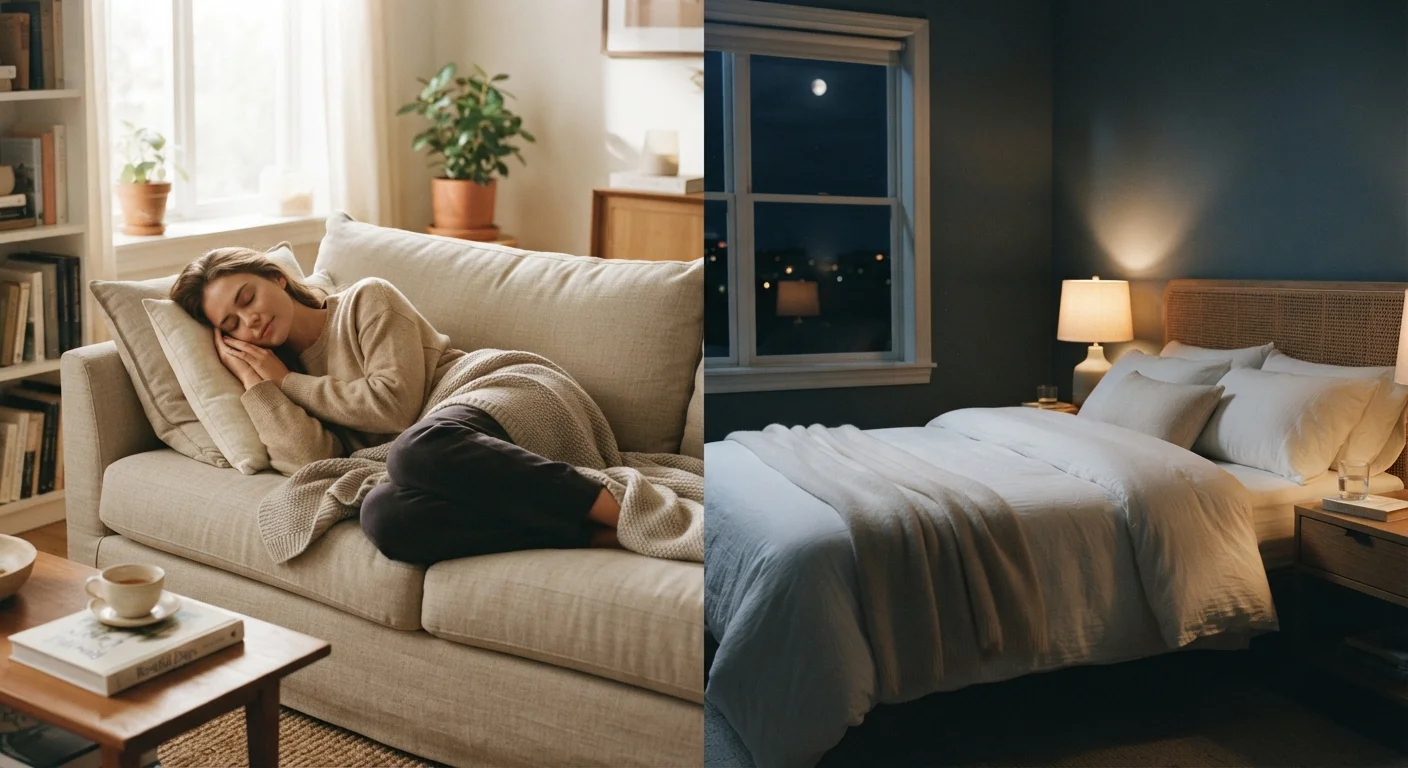
Key Takeaways
Option A
Napping
The targeted, on-demand alertness booster.
Best for: Quickly restoring focus and reducing sleepiness during the day without replacing the sleep cycle.
Option B
A Full Night's Sleep
The non-negotiable foundation of health and recovery.
Best for: Delivering complete physical repair, memory consolidation, and hormonal regulation that short rest cannot replicate.
If you need a quick midday cognitive reset
Napping
A 10–20 minute nap can sharply improve alertness, reaction time, and mood without disrupting nighttime sleep when timed appropriately.
If you want to support immune function, memory, and physical recovery
A Full Night's Sleep
Only a complete sleep cycle delivers the slow-wave and REM stages essential for tissue repair, hormonal balance, and long-term brain health.
If you're consistently sleeping fewer than seven hours nightly
A Full Night's Sleep
Naps can ease daytime symptoms of sleep deprivation temporarily, but restoring a consistent nighttime sleep schedule is the priority for lasting health.
If you work shifts or have an irregular schedule
Napping
Strategic napping is one of the most evidence-supported tools for managing alertness and reducing fatigue when nighttime sleep windows are constrained.
What Each Type of Rest Actually Does
Sleep is not a single, uniform state. A full night of sleep — generally seven to nine hours for most adults — is structured into repeating cycles lasting roughly 90 minutes each. These cycles move through light sleep, slow-wave (deep) sleep, and REM (rapid eye movement) sleep. Each stage contributes differently: slow-wave sleep is when the body performs most of its physical repair and memory consolidation, while REM sleep is strongly linked to emotional regulation and learning. To understand more about what unfolds biologically during this process, see what your body does during sleep.
A nap, by contrast, is a short, intentional sleep episode taken outside of nighttime hours. Its effects depend heavily on duration. A nap lasting 10–20 minutes stays mostly in the lighter stages of sleep, producing a quick boost in alertness. Extend that to 30–60 minutes and you risk entering slow-wave sleep — waking mid-cycle creates a groggy, disoriented feeling called sleep inertia. A 90-minute nap, on the other hand, can complete a full cycle and may include REM sleep, minimizing grogginess while offering more restorative benefit.
| Criterion | Napping | A Full Night's Sleep |
|---|---|---|
| Typical duration | 10–90 minutes | 7–9 hours |
| Sleep stages accessed | Mostly light sleep (short naps) | All stages, including deep & REM |
| Alertness boost | Rapid and noticeable | Sustained throughout the day |
| Physical repair | Minimal | Substantial (slow-wave sleep) |
| Memory consolidation | Modest (longer naps only) | Strong across multiple cycles |
| Risk of grogginess | Moderate (if 30–60 min) | Low when timing is consistent |
| Circadian impact | Can reduce nighttime sleep drive | Anchors and reinforces the body clock |
| Addresses sleep debt | Temporarily eases symptoms | Primary path to genuine recovery |
What Naps Can — and Cannot — Compensate For
Research consistently shows that short naps improve performance on tasks requiring sustained attention, working memory, and reaction speed. A well-timed nap can partially offset the cognitive drag of a poor previous night. However, naps do not meaningfully restore the deep-sleep stages responsible for physical recovery, immune activity, or hormonal repair — processes that are largely time-locked to nighttime biology and circadian rhythms.
Cumulative sleep debt — the shortfall that builds when you routinely sleep fewer hours than your body needs — is not erased by napping alone. Studies suggest that while naps reduce sleepiness in the short term, the underlying physiological deficits from chronic under-sleeping require genuine nighttime recovery. Sleeping in on weekends is another common strategy, but it, too, has limited effectiveness and can disrupt your internal clock.
~26%
Performance improvement from a short nap
NASA research on military pilots and astronauts found that a 40-minute nap improved performance by approximately 34% and alertness by 100%, illustrating the cognitive value of strategic rest.
7–9 hrs
Recommended nightly sleep for adults
The American Academy of Sleep Medicine and the Sleep Research Society recommend seven or more hours of sleep per night for adults to support optimal health.
1 in 3
American adults not getting enough sleep
According to the CDC, more than one-third of American adults regularly sleep less than the recommended amount, making recovery strategies a public health concern.
The timing of naps also matters significantly. Napping after 3:00 p.m. can reduce sleep pressure — the biological drive to sleep — enough to delay or fragment nighttime sleep. For people already struggling to sleep well at night, a late nap may worsen the problem. For practical steps to protect your nighttime routine, these overlooked habits that erode sleep quality are worth reviewing.
How to Use Both Strategically
Thinking of naps and nighttime sleep as competing options misses the point. The most effective approach treats a full night's sleep as the non-negotiable foundation and napping as a targeted supplement for specific circumstances — a demanding afternoon ahead, a poor previous night, or an irregular work schedule.
If you decide to nap, keep it short (10–20 minutes) and schedule it in the early-to-mid afternoon to avoid encroaching on your nighttime sleep drive. Set an alarm rather than relying on waking naturally. Some people find that drinking a small amount of caffeine immediately before a short nap — sometimes called a "coffee nap" — allows the caffeine to take effect around the time they wake, producing a sharper recovery; however, this approach doesn't suit everyone and caffeine sensitivity varies widely.
Protecting nighttime sleep remains the priority. Evening wind-down habits that cue your brain toward sleep can make a meaningful difference, as can addressing the environmental and behavioral factors covered in our beginner's guide to building a sleep-friendly life.
This article is for general informational purposes only and does not constitute medical advice. If you have persistent sleep difficulties, please consult a qualified healthcare professional.