

Key Takeaways
Tyre Pressure
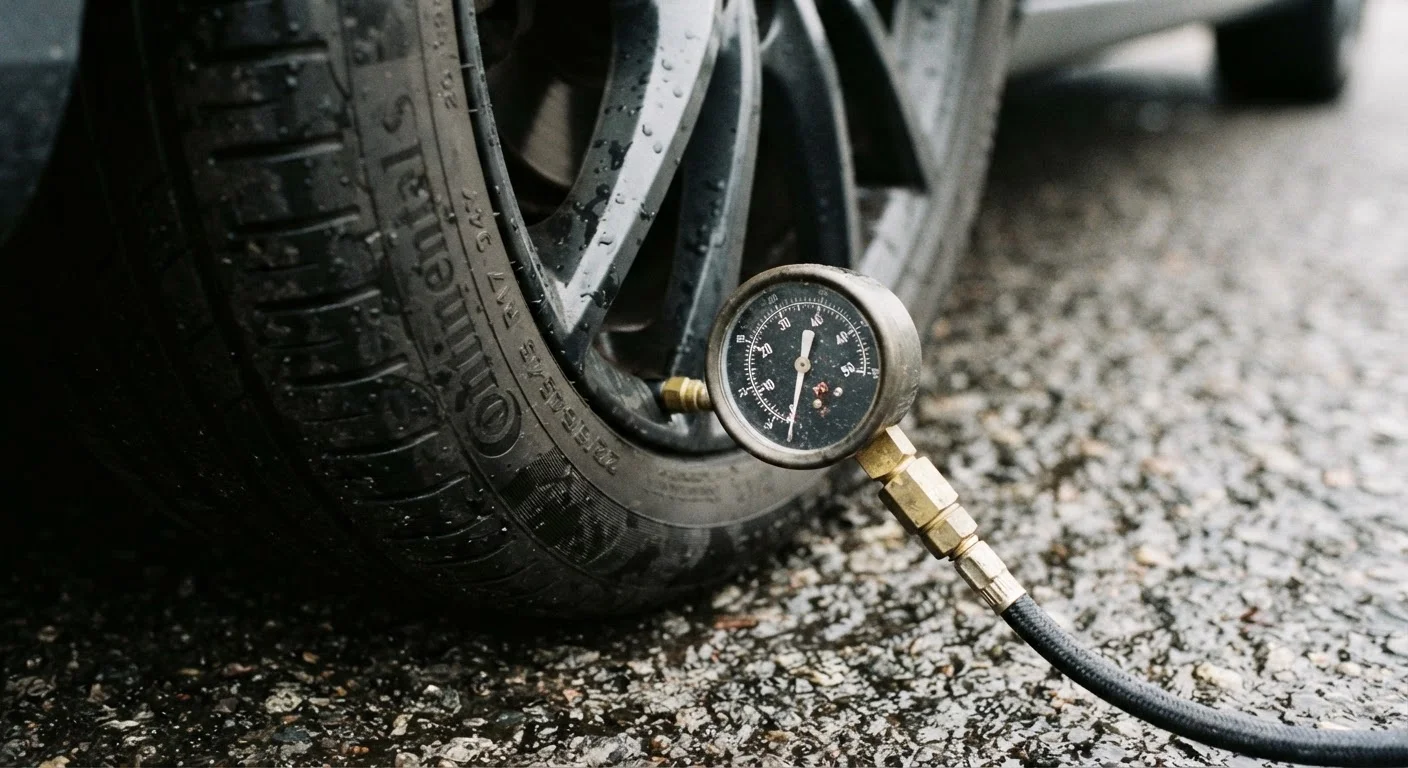
Tyre pressure refers to the amount of air inside a tyre, measured in pounds per square inch (PSI) in the US. Every vehicle has a manufacturer-recommended PSI range, usually found on a sticker inside the driver's door jamb or in the owner's manual. Maintaining pressure within that range keeps the tyre in proper contact with the road.
PSI is a measure of force per unit area. Tyre pressure changes with temperature — roughly 1 PSI for every 10°F shift — so pressure readings taken on a cold tyre are most accurate.
Why Tyre Pressure Is a Safety Variable, Not Just a Maintenance Detail
Most drivers think of tyre pressure as a housekeeping task — something to address when the dashboard warning light appears. In reality, tyre pressure is an active safety variable that affects how a vehicle handles, stops, and responds to road conditions every time it moves.
Tyres work by maintaining a specific shape under load. That shape — determined by correct inflation — controls how much rubber contacts the road at any given moment. When pressure is wrong in either direction, that contact patch changes, and so does the vehicle's behaviour. The effects are subtle at normal speeds but compound quickly in emergency situations or adverse conditions, such as wet roads.
TPMS Is a Warning System, Not a Pressure Monitor
Most vehicles sold in the US since 2008 include a Tyre Pressure Monitoring System (TPMS) that alerts drivers when pressure drops significantly below safe levels. However, TPMS typically triggers only when pressure is already 25% or more below the recommended PSI — meaning tyres can be meaningfully under-inflated without triggering the warning light. Monthly manual checks remain necessary even with TPMS equipped.
What Under-Inflation Does to a Vehicle
An under-inflated tyre flexes more than it should with each rotation. That excess flexing generates heat — one of the primary causes of tyre failure, including blowouts at highway speeds. Beyond failure risk, under-inflation causes the outer edges of the tread to carry disproportionate load, wearing those edges down faster than the center.
Handling also degrades. Steering becomes less precise because a soft tyre doesn't transmit road feedback cleanly. In wet conditions, under-inflated tyres are more prone to aquaplaning — where water builds up between the tread and road surface faster than the tyre can displace it.
On fuel economy, the US Department of Energy notes that under-inflated tyres increase rolling resistance. More resistance means the engine works harder to maintain speed, consuming more fuel. This effect is modest per tyre but significant when multiple tyres are low, which is common since pressure loss tends to occur gradually across all four.
~1 PSI
Pressure drop per 10°F temperature decrease
General automotive guidance cited by the US Department of Energy and tyre industry sources.
0.2%
Fuel economy loss per PSI drop per tyre
Cited by the US Department of Energy as an approximate figure for the fuel economy impact of under-inflation.
25%
Drivers with at least one significantly under-inflated tyre
Figures from periodic National Highway Traffic Safety Administration (NHTSA) roadside surveys have found substantial rates of under-inflation among vehicles in everyday use.
What Over-Inflation Does to a Vehicle
Over-inflation is less common but equally problematic. A tyre filled beyond its recommended PSI becomes rigid, causing it to ride on the center of the tread rather than the full contact patch. Center tread wear is a clear sign of chronic over-inflation.
Reduced contact area means less grip — which directly affects braking distance. In an emergency stop, an over-inflated tyre gives the vehicle less rubber to work with, extending the distance needed to halt. The tyre also loses its ability to absorb minor road imperfections, making it more susceptible to sudden damage from potholes or debris.
Ride quality suffers noticeably too. An over-inflated tyre transmits more road vibration into the cabin, which some drivers interpret as a sign the vehicle needs other repairs.
How to Maintain Correct Tyre Pressure
The target PSI for your vehicle is set by the manufacturer and is specific to the car's weight, suspension design, and tyre size. It is printed on a sticker inside the driver's door jamb and in the owner's manual. The number on the tyre sidewall is the tyre's maximum rated pressure — not a target and not a recommendation.
Check pressure monthly using a quality gauge when tyres are cold. Cold-tyre readings are accurate; pressure rises as tyres warm up during driving, so hot readings will appear higher. Adjust as needed, and always check after significant temperature swings — a drop of 10°F typically reduces PSI by about 1 PSI.
Tyre pressure is part of a broader set of routine checks. Regular maintenance tasks, including tyre rotation and brake inspection, work together to keep a vehicle safe and efficient. Drivers who build pressure checks into their monthly routine also tend to catch slow leaks early, before they cause a roadside problem.
Check Pressure Before Long Trips
Before any extended drive, verify tyre pressure on all four tyres plus the spare. Long highway stretches at speed put sustained demand on tyres, and a tyre that is marginally low at the start of a trip will run hotter and less safely over hundreds of miles. A two-minute check at a gas station before departure is a low-effort, high-value safety habit.
For drivers looking at the bigger financial picture, consistent tyre pressure is one of the simplest contributors to reduced running costs. Managing long-term ownership costs starts with the basics — and few things are as basic, or as impactful, as properly inflated tyres.