

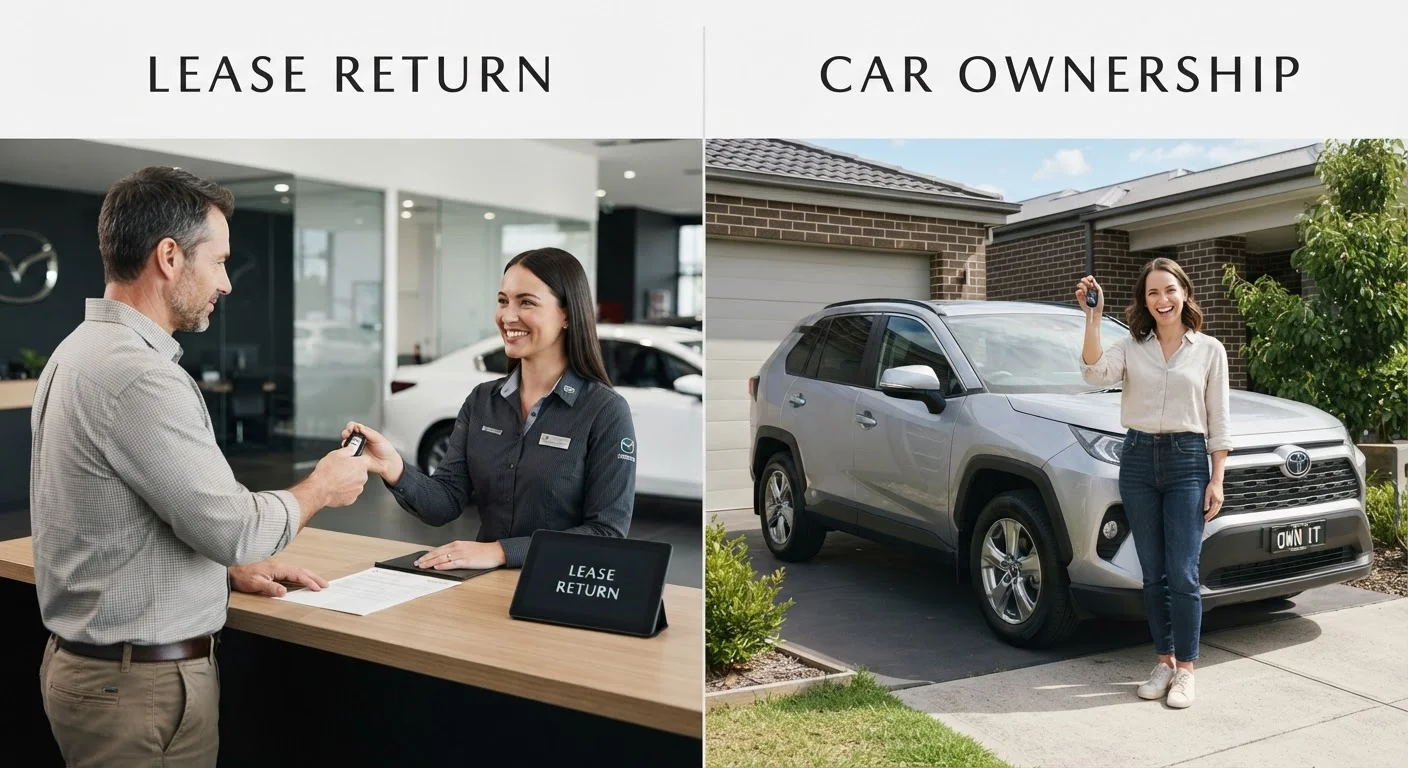
Key Takeaways
Option A
Leasing a Car
The flexible, lower-commitment arrangement.
Best for: Drivers who want a new vehicle every few years with predictable monthly costs and no long-term ownership responsibility.
Option B
Owning a Car
The long-term, build-equity approach.
Best for: Drivers who want full control over their vehicle, plan to keep it for many years, and prefer freedom from mileage or condition restrictions.
If you drive fewer than 12,000–15,000 miles per year and want a new model regularly
Leasing a Car
Lease terms are structured around moderate mileage, and you return the vehicle before major mechanical issues typically arise.
If you drive heavily, own your vehicle outright, or want long-term cost efficiency
Owning a Car
Once a loan is paid off, ownership eliminates monthly payments entirely and lets you maximise the vehicle's full lifespan.
If predictable monthly budgeting is your top priority
Leasing a Car
Lease payments are fixed, and many leases include warranty coverage that limits unexpected repair costs during the term.
If you want to modify, customise, or use your vehicle without restrictions
Owning a Car
Owners are free to modify, repaint, or use their vehicle commercially — options that standard lease agreements prohibit.
What Each Arrangement Actually Means
At its core, a lease is a long-term rental agreement — typically 24 to 48 months — during which you pay for the right to use a vehicle that remains the property of the lessor (usually a finance company affiliated with a dealership). At the end of the term, you return the car. You do not own it, you cannot sell it, and you walk away with no asset.
Owning a car, whether purchased outright or through a loan, means the title transfers to you. You are responsible for the vehicle in full — its condition, its depreciation, and eventually its resale or disposal. But you also hold an asset with real-world value at every stage.
This distinction matters beyond semantics. It shapes what you can do with the vehicle, what happens at the end of the agreement, and how costs accumulate over years rather than months. For a deeper look at what vehicle ownership actually costs once you account for all ongoing expenses, see the real cost of owning a car.
| Criterion | Leasing | Owning |
|---|---|---|
| Ownership of vehicle | Lessor retains title | You hold the title |
| Typical monthly payment | Lower (covers depreciation only) | Higher (covers full vehicle value) |
| Mileage limits | Yes — penalties apply if exceeded | None |
| End-of-term options | Return or (sometimes) buy out | Keep, sell, or trade in |
| Equity built | None | Yes — grows as loan is repaid |
| Modification freedom | Restricted by contract | Unrestricted |
| Long-term cost (5+ years) | Ongoing payments indefinitely | Payments end; running costs remain |
Costs, Restrictions, and Long-Term Trade-offs
Lease payments are calculated primarily on the vehicle's depreciation during the lease term — not its full value — which is why monthly figures are often lower than comparable loan payments. However, that lower payment doesn't mean leasing is cheaper overall. At term's end, you have no equity to carry into your next vehicle.
Lease agreements impose two significant restrictions that don't apply to owners:
- Mileage caps: Most leases set annual limits, commonly between 10,000 and 15,000 miles. Exceeding these triggers per-mile penalty fees, which can add up quickly for high-mileage drivers.
- Condition standards: The vehicle must be returned within defined wear-and-tear parameters. Excessive wear — including certain scratches, tire condition, or interior damage — can result in end-of-lease charges assessed by the leasing company.
Owners face none of these constraints, but they absorb the full impact of depreciation and are responsible for all maintenance and repair costs once any warranty expires. Staying on top of routine maintenance is particularly important for owners intending to keep a vehicle beyond the warranty period.
~30%
Share of new US vehicles leased annually
Industry data consistently shows roughly a quarter to a third of new vehicle transactions in the US involve leases rather than purchases, varying with interest rate environments.
8+ years
Average age of vehicles on US roads
According to S&P Global Mobility data, the average age of light vehicles in operation in the United States has exceeded eight years, reflecting how long owners typically keep purchased vehicles.
Before signing either type of agreement, it pays to understand the fine print. Our guide on key questions to ask before agreeing to a car finance deal covers the details worth scrutinising in any financing or lease contract.
Which Arrangement Fits Your Situation
Leasing tends to suit drivers whose lives call for flexibility — those who prefer the latest safety technology, keep predictable annual mileage, and don't want the complexity of selling a used vehicle. It also suits those whose circumstances may change and who want shorter-term commitment.
Ownership tends to suit drivers who put high annual mileage on a vehicle, want to customise it, plan to keep it long enough to eliminate monthly payments entirely, or simply prefer not to operate under usage restrictions. If you're weighing the new-versus-used dimension of ownership, buying new vs. used lays out those trade-offs clearly.
Households managing multiple vehicles face a compounded version of this decision. Owning one car vs. running two explores how lease and ownership arrangements interact when more than one vehicle is in play. Similarly, if you're considering purchasing rather than leasing, financing vs. paying cash walks through the financial trade-offs of how you pay for the vehicle itself.
Neither path is inherently right or wrong. The stronger question is which arrangement aligns with how you actually use a vehicle and what you want your relationship with that vehicle to look like three or four years from now.