

Key Takeaways
What Uneven Brake Wear Actually Looks Like
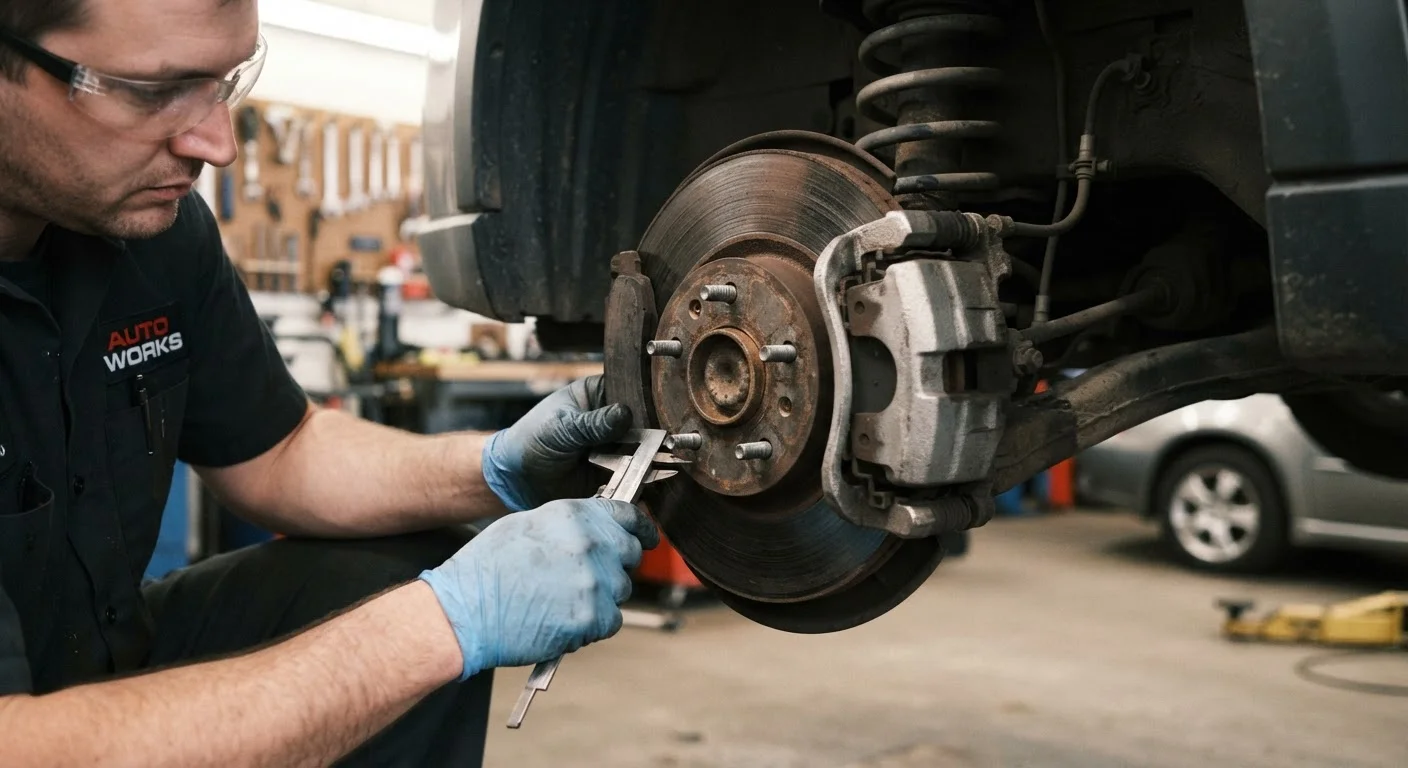
Brake pads are designed to wear gradually and evenly across both the inner and outer surfaces. When wear is uneven — meaning one pad is significantly thinner than the other, or one wheel's brakes are more worn than the opposite side — that's a signal something mechanical has gone wrong.
Common signs include a pulling sensation when braking, a grinding or squealing noise from one side of the car, a pulsating brake pedal, or visible differences in pad thickness if you can see through the wheel spokes. Some drivers also notice the steering wheel vibrating under braking pressure. Any of these symptoms warrant a prompt inspection by a qualified mechanic — continued driving with compromised brakes is a safety risk.
For a broader look at the maintenance checks that protect your car's safety systems, see our routine maintenance guide for drivers.
Skipping brake inspections during routine tire rotations.
Why it happens: Many drivers view tire rotations as a quick, focused task and don't ask the technician to visually check brake pad depth at the same time.
Ignoring early warning signs like light squealing or mild pulling.
Why it happens: Drivers often rationalize minor symptoms as temporary or road-related, delaying action until the problem worsens significantly.
Replacing only one side's brake pads instead of replacing them in axle pairs.
Why it happens: To save money, some drivers or budget shops replace only the severely worn side, assuming the other side is fine.
Overlooking a seized or sticking brake caliper as a cause of the problem.
Why it happens: Calipers are rarely top-of-mind for drivers, and the symptom — one pad wearing much faster — can be mistaken for a simple pad-quality issue.
Using mismatched brake pad compounds on the same axle.
Why it happens: This can happen when replacement pads are sourced inconsistently, or when one side is replaced with whatever is available at the time.
When to Stop Driving and See a Mechanic
Some brake issues can be monitored over a short period, but others require immediate attention. If you notice strong pulling to one side when braking, a grinding metal-on-metal sound, or a significant spongy or low brake pedal, stop driving and have the vehicle inspected before using it again. These symptoms can indicate brake failure is imminent.
Brake Problems Are a Safety Issue
Uneven braking reduces your car's ability to stop predictably in an emergency. If you experience strong pulling, grinding sounds, or a significantly low brake pedal, do not continue driving until the vehicle has been inspected by a qualified mechanic. Brake systems are safety-critical and should never be left unaddressed.
Even if symptoms seem mild, uneven wear that goes uncorrected will typically damage the brake rotor — the metal disc the pads clamp against. Rotor resurfacing or replacement adds meaningful cost to what might have been a simple pad swap. Regular brake inspections, typically every 12,000 miles or at each tire rotation, can catch developing problems before they escalate.
~30%
Brake repairs involving caliper issues
Industry technician surveys consistently identify stuck or seized calipers as a leading contributor to premature and uneven pad wear.
2–3×
Cost increase when rotors are damaged by neglect
Allowing uneven pad wear to progress to rotor scoring can multiply the total repair bill compared to an early pad replacement alone.