

Key Takeaways
The Maintenance Gaps Most Drivers Miss
Oil changes and tire rotations get most of the attention — and rightly so. But a handful of equally important checks get skipped year after year, quietly shortening the life of a vehicle that could otherwise run reliably for 200,000 miles or more. These aren't obscure tasks reserved for gearheads; they're routine inspections that take minutes to perform and can save hundreds — sometimes thousands — of dollars in avoidable repairs.
Understanding which checks to add to your maintenance rhythm is straightforward once you know what to look for. The list below covers the most commonly overlooked items, what each one does, and why it matters to your car's long-term health. For a solid foundation of the basics, our routine maintenance checklist is a useful starting point alongside the guidance here.
Cabin Air Filter
The cabin air filter cleans the air that enters your vehicle through the heating, ventilation, and air conditioning (HVAC) system. A clogged filter restricts airflow, forces the blower motor to work harder, and degrades air quality inside the cabin — particularly relevant for allergy sufferers.
Most manufacturers recommend replacement every 15,000 to 25,000 miles, though driving in dusty or polluted environments can shorten that interval. Filters are typically accessible behind the glove box or under the dashboard without tools, making this one of the easiest DIY inspections a driver can do. Check your owner's manual for the exact location and interval for your vehicle.
A clogged cabin filter forces the blower motor to work harder, accelerating wear and reducing air quality.
Serpentine Belt Condition
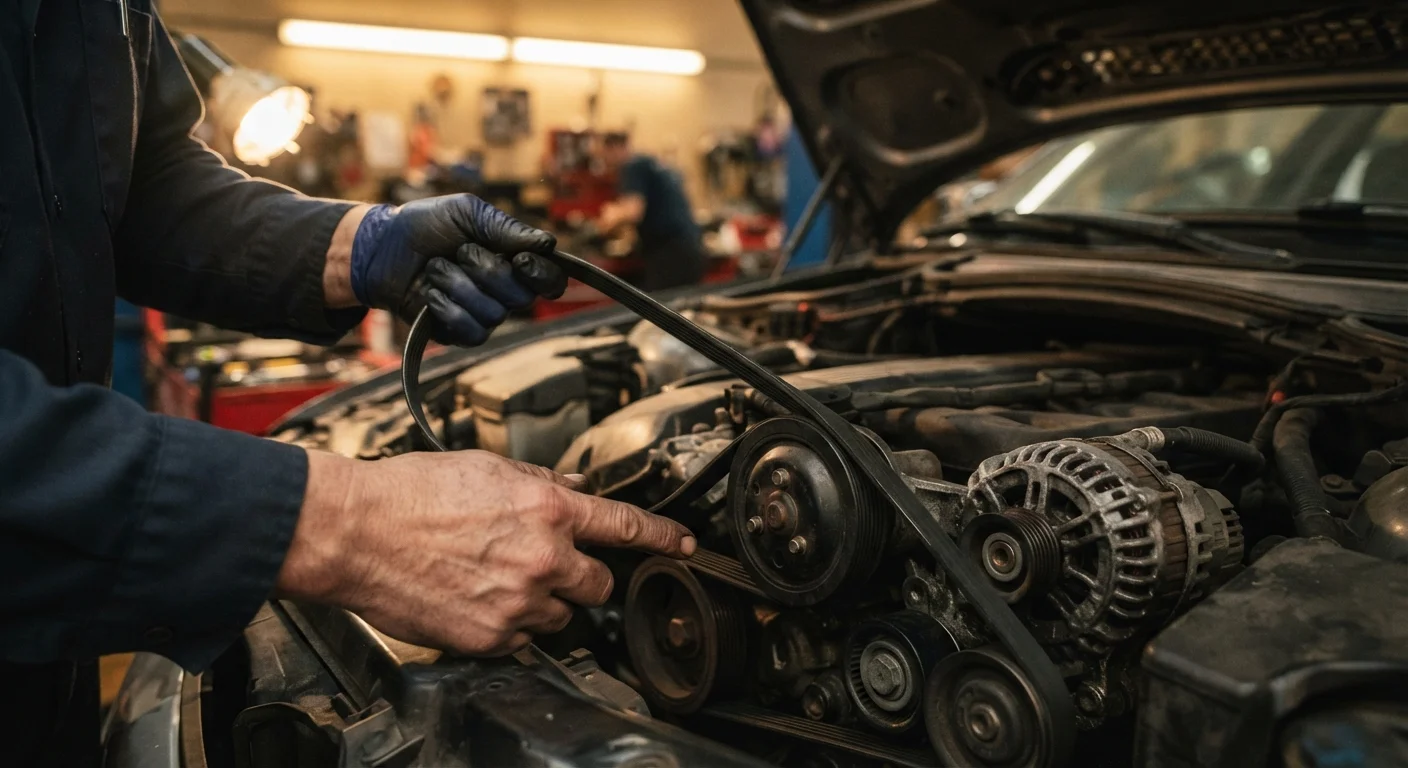
The serpentine belt drives multiple engine accessories simultaneously — the alternator, power steering pump, air conditioning compressor, and in some vehicles, the water pump. A worn or cracked belt that fails unexpectedly can leave you stranded and may cause cascading damage if the water pump stops circulating coolant.
Inspect the belt visually every 30,000 miles or as directed by your owner's manual. Look for fraying edges, glazing, cracks along the ribs, or any sign of missing chunks. Belt replacement is a task for a qualified mechanic, but the visual inspection itself takes under two minutes with the hood open and the engine off and cool.
A failed serpentine belt can stop the water pump, risking engine overheating within minutes.
Coolant Condition and Concentration
Coolant (antifreeze) does more than prevent freezing — it also inhibits corrosion inside the cooling system and raises the boiling point of the fluid under pressure. Over time, the corrosion inhibitors in coolant degrade, and old coolant can become acidic, attacking metal components and rubber hoses from the inside.
Most vehicles require a coolant flush every 30,000 to 50,000 miles, though some modern long-life formulations extend that interval. An inexpensive test strip can check the pH and freeze protection level of your coolant. Checking and topping up your car's fluids — including coolant — is covered in detail in our dedicated guide. Never open the coolant reservoir cap when the engine is hot.
Degraded coolant can turn acidic, quietly corroding metal components and rubber hoses over time.
Brake Fluid Moisture Content
Brake fluid is hygroscopic — it absorbs moisture from the surrounding air over time. As water content rises, the fluid's boiling point drops, which can lead to vapor lock under heavy braking and a spongy or fading pedal feel. This is a genuine safety concern, not just a performance issue.
Many drivers never think to check brake fluid beyond its level in the reservoir. Inexpensive test strips measure moisture content directly. Most manufacturers recommend replacement every two years or as indicated by moisture testing, whichever comes first. Brake fluid flushing should be performed by a qualified mechanic, but checking the reservoir level and color is something any driver can do with the hood open.
High moisture content in brake fluid lowers its boiling point and can compromise stopping performance.
Battery Terminal Corrosion
Corrosion at the battery terminals — the white or bluish powdery buildup around the positive and negative posts — increases electrical resistance in the circuit. This can cause hard starts, dim lights, and erratic behavior from electronics, and it accelerates battery wear. Many drivers attribute these symptoms to a failing battery when the terminals are the actual culprit.
Inspect terminals every six months or at each oil change. Minor corrosion can often be cleaned with a wire brush and a baking soda-and-water solution after disconnecting the battery — but if you're unfamiliar with working around automotive electrical systems, have a mechanic address it. Always follow your owner's manual guidance on battery disconnection procedures, as some vehicles require specific steps to preserve electronic settings.
Corroded battery terminals increase resistance and can mimic symptoms of a failing battery.
Tire Valve Stem Condition
The rubber valve stems on standard wheels degrade over time — cracking, hardening, and eventually leaking air. This slow leak is difficult to detect without spraying soapy water around the stem, yet it causes persistent under-inflation that increases tire wear, reduces fuel efficiency, and affects handling stability.
Valve stems are inexpensive components typically replaced when new tires are mounted. If your vehicle is running on aging tires that have been on the car for several years without a stem replacement, it's worth asking your tire technician to inspect them. Maintaining correct tire pressure — checked monthly with a quality gauge — remains one of the highest-return habits in vehicle ownership.
Cracked valve stems cause slow leaks that quietly degrade tire wear and fuel economy over time.
Building a More Complete Maintenance Routine
None of the checks above require specialist tools or advanced mechanical knowledge to inspect — though some repairs are best left to a qualified mechanic. Getting into the habit of a quick visual walk-around and periodic fluid check can catch problems when they're still cheap to fix. Your owner's manual is the single most authoritative source for service intervals specific to your vehicle's make, model, and engine.
Keep a Simple Maintenance Log
A basic notebook or phone note tracking each service date and mileage makes it far easier to spot overdue checks at a glance. Include inspections like cabin filter condition and coolant color alongside traditional services. Even a rough log helps when speaking with a mechanic, ensuring nothing is inadvertently skipped during routine visits.
The long-term financial case for staying on top of these checks is significant. Deferred maintenance compounds quickly, and what starts as a $20 cabin filter replacement can eventually contribute to HVAC blower motor failure. Similarly, simple ownership habits — including timely inspections — consistently reduce total running costs over a vehicle's life. As seasons change, the stakes shift: seasonal checks layer neatly on top of these year-round essentials.